Album of the month

Blues enthusiast and board member Willem van de Kraats has been pulling an album from his large collection of vinyl every Sunday morning for years, sitting down with a cup of coffee and enjoying the blues. That Sunday ritual gave us the idea of doing this monthly on a larger scale. Blues lovers choose their favorite album, write their personal memories with it and mail them to lpvandemaand@bluesinwijk.nl.  Willem and Jos du Floo together form a jury and choose the best entry. We publish that choice on our website, share it on social media, and Jos plays a song from the LP every Sunday for a month in his blues program ‘Highstreet Jazz&Blues’ op Regio90FMThe first album of the month was announced by Jos on Sunday, October 4.  Below all the elected albums and the stories can be read back and a nice archive of wonderful blues albums will be created in the coming years. 

2025 May

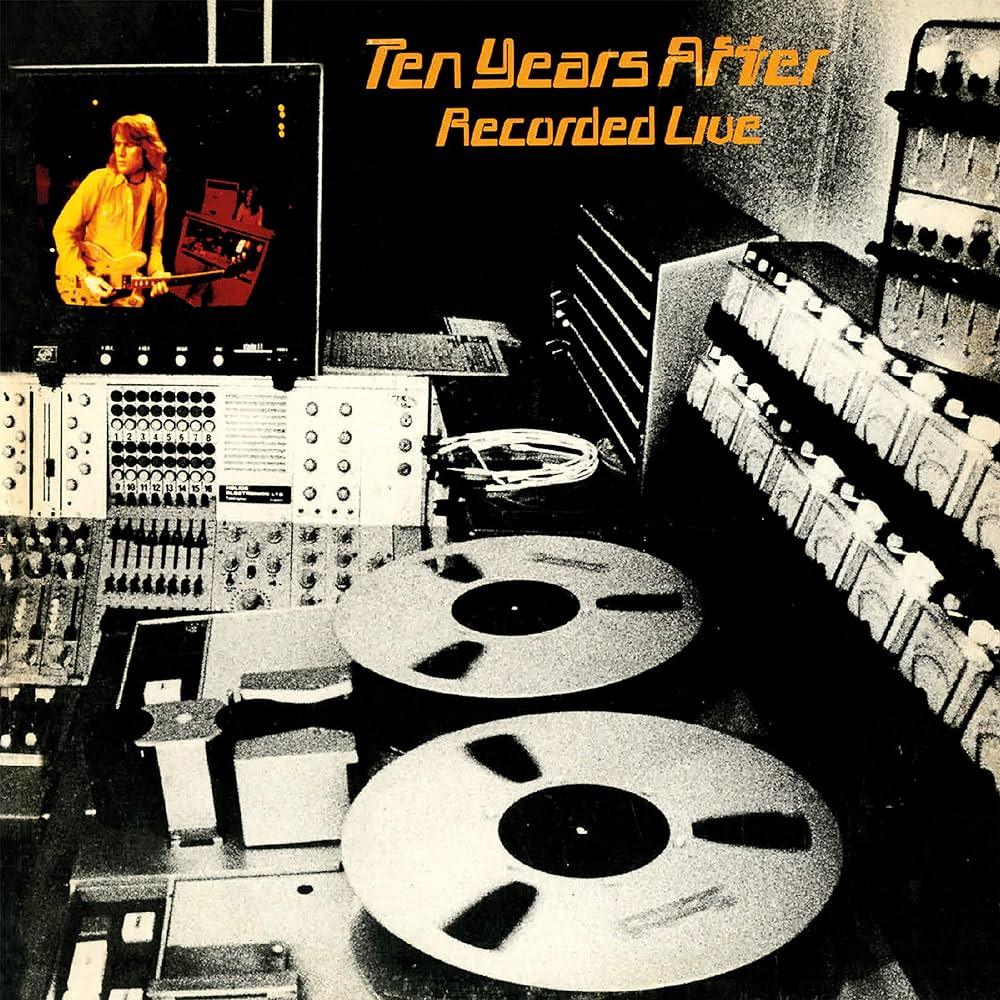
To choose a favorite LP when you are alone is already very difficult. To do it with 2 people seemed even more difficult at first, but in our case it actually wasn’t too bad. ‘Recorded Live’ by Ten Years After we both had in our record collection when we were youngsters. Although we are both a little less into blues rock now, this album made a big impression at the time. Especially for me (Frank) as a guitarist. Alvin Lee was (and still is) a hero to me. With “I’m Going Home” being the absolute highlight on this album, we both definitely think back to the song “Help Me” with a smile. So soft and fragile in the beginning, but then, like thunderclap that harsh accent in the 2nd verse that had us scaring like scared dogs. Especially when we had headphones on late at night and almost fell asleep. The dynamics Ten Years After applies in many songs is still unprecedented and an inspiration to us. In the early years when Joep and I were in a band together (beginning in 1978), we didn’t play blues. We tried to make our own songs and that was more towards (symphonic) rock. Well, a moderate infusion of that. In retrospect, we both actually don’t understand why we didn’t make Blues at the beginning of our musical journey. We thought Blues music was really cool, but didn’t actually know it was Blues. Only much later did we realize that the songs we both used to like best were actually Blues songs. For a long time we were in a band together, but we also went our separate ways musically. However, we always visited each other as friends. We talked more and more about Blues together and finally in 2007 we got back together musically and started our first blues band (Mojo Hand) and quit the other bands we were in. Now we go to America every few years to dive deep into Blues history and now we have 3 blues bands together (Mojo Hand, Ramblin’ Dog and Reemers & de Greef), which allows us to express our musical passions. In all the bands we play a mix of our own songs and existing songs that we edit ourselves.
Frank Reemers & Joep de Greef (Mojo Hand)

2025 April

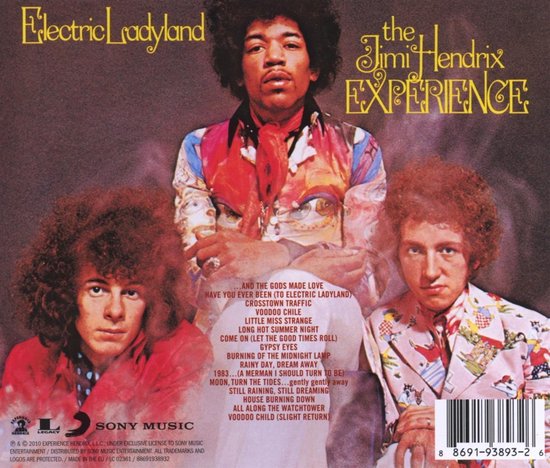
In this case, a double-LP even. Jimi Hendrix, Electric Ladyland. My brother Jean-Pol was 8 years older than me and arrived with this album in the winter of ’68-’69 (the double-LP came out in October 1968). I could hear in the bedroom next to me from the green Philips pickup (with matching boxes), sounds you didn’t hear on the radio. This definitely did not sound like top-40 music. He thought it was funny that his 10 (!) year old brother was fascinated by this ‘underground’ music. ‘And The Gods Made Love,’ immediately followed by ‘Have You Ever Been To Electric Ladyland,’ (certainly one of the very best Hendrix pieces at all). I had never heard of the word psychedelic before but understood at once what it meant, right after that ‘Crosstown Traffic’, what a sound, what an atmosphere, what a feeling this music unleashed in me. That voice, that guitar sound. Bloody hell. I’m not going to review the whole album here, but who doesn’t know the Hendrix version of ‘All Along the Watchtower’? Imagine you are 10 years old, living somewhere deep in South Limburg and you hear this song for the first time in your life. Margraten briefly became New York or London or Woodstock, which is how this music took me. Special mention for a song that still gives me goosebumps every time now (a song that may not ring a bell with most); ‘1983 – A Merman I Should Turn to Be’. Thirteen and a half minutes. When I put this on in the car I really have to stand by the side and listen until it’s over. Softly singing along (I know the poetic not everyday lyrics by heart after a thousand listens) and realizing that these were the first Hendrix sounds I ever heard, something happened then in my (now deceased) brother’s bedroom that will stay with me all my life. Later (2002) I had the immense good fortune to play once again with Noel Redding, the right hand of God, so to speak. He told me about his time with Jimi and ‘the Experience’ and I really had to squeeze my arm that this was really true what I experienced. Later it became clear what influence Hendrix had on guitarists and modern music as a whole. To this day, I think it does. Hendrix also made me appreciate the blues, because although he was not a ‘pur sang’ blues musician, his music was certainly deeply intertwined with it. ‘He took the blues to another level’ Steve Lukather once said to me. Luke is also big Hendrix fanatic and from him also the unsung statement ‘Jimi could make a broomstick sing’. Although I spent hours and hours, weeks, months, yes years trying to master guitar playing, I never succeeded to my satisfaction, so I started singing. Short anecdote: in 2001 I managed to get a nice group of musicians together in the studio, including Richard van Bergen (Rainy Day, what a sound Ries…), Roel Spanjers, Marcus Weijmaere, Marcel Aeby, Jules Peters and the current mayor of Valkenburg, Daan Prevoo, plus about ten others. The CD release party of ‘The Hendrix Files’ took place in April 2002 with, among others, Noel Redding, Jan Akkerman and aforementioned men. Sweet memories.
Philippe Bastiaans (Phil Bee)

2025 March

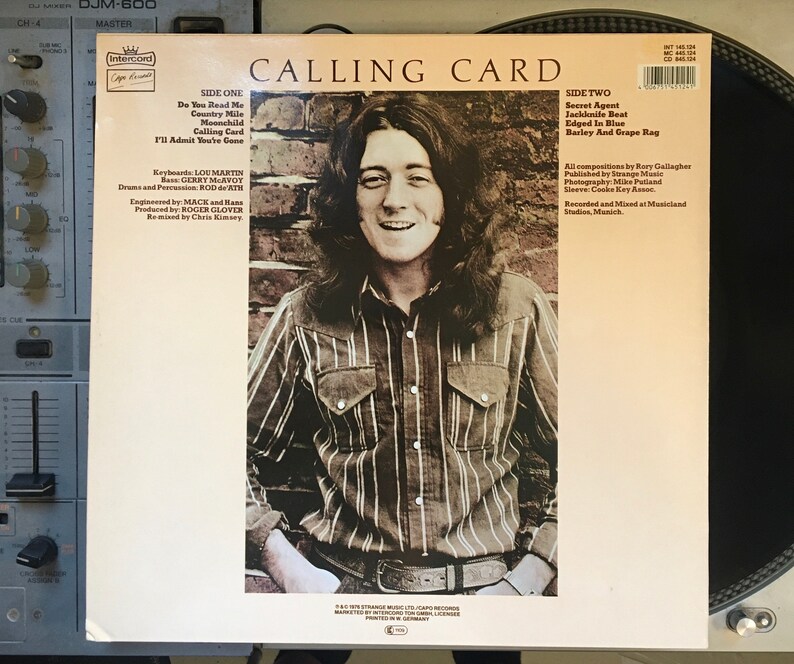
My father had a big record collection and when I started playing guitar when I was 12 he came up with Rory Gallagher’s ‘Calling Card’ album. He said, “Listen to this, on this album there are all the different styles that will be useful to you later.” And so in a few days I had become a big fan of Rory that has not left me, not knowing that I later went on to play with Rory’s original band members for 9 years, namely Gerry McAvoy, Ted McKenna and Brandan O’Neil. On this record there are Jazz, Country Blues, Blue Grass and Rock influences that let you hear the freedom you would love to feel that way as a musician, but more importantly I think: it never gets boring as I stand and play the songs night after night, ‘Do You Read Me’, a wonderful groovy song or the rocky ‘Moonchild’ is an experience, but it all started for me anyway with the song ‘Calling Card’. Listen to this album!!!
Marcel Scherpenzeel

2025 February

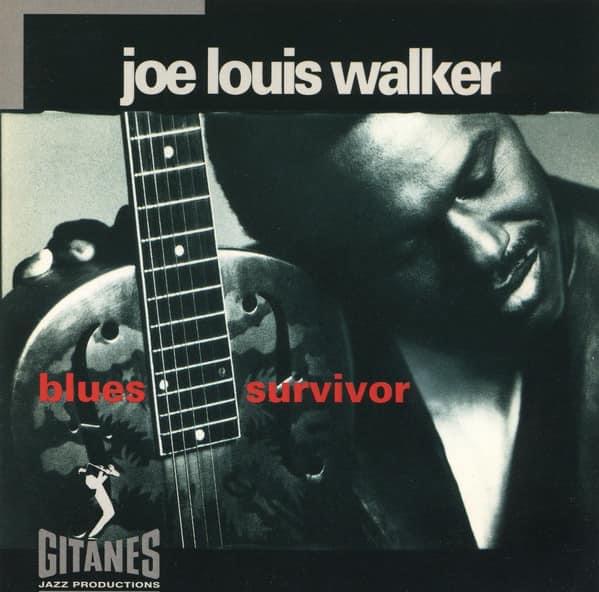
As a young boy, I was obsessed with rock & roll music of the 1950s (Bill Haley, Little Richard, Gene Vincent). Thereby, the taste was complemented from my parents’ collection, who had a penchant for Jazz and New Orleans rhythm & blues (Fats Domino). In my teenage years, my tastes went a bit more in other directions, but always with the blues as a base; Status Quo and ZZ Top were big favorites. But the “real” blues kept itching and on Thursday nights I always listened to a blues program on the radio (Blues Highway with Harro de Jonge). In it, authentic blues music was played with almost exclusively Afro American artists. Mind you, these kinds of programs were actually essential, because in those days you couldn’t hear music anywhere else on the radio and record stores didn’t sell this music either. And the Internet would not appear until 25 years later. When one night Willie Dixons’ 29 Ways, performed by John Littlejohn was played, this was a turning point for me, this was the “real deal” after all! Therefore, the album this song is on (Highway Is My Home) should really be the album this story is ultimately about, but it’s not. Because there is an album that has been even more important in the development of my taste in music and as a musician. I fell more and more under the spell of black American blues music and less and less under the spell of white blues. This was because I found out that this music came directly from gospel and many Afro American musicians effortlessly mixed all the other resulting styles like funk and soul with their blues.  My big hero in that became Joe Louis Walker; from acoustic Delta blues to Memphis soul to Bay Area funk and back again. He already had a few great records to his name, but when Blues Survivor came out in 1993 it became my all-time favorite blues (by the way) album, and still is after 30 years. An album that is full of beautiful arrangements, great vocals and guitar, and very diverse. But what makes the album extra special for me is that it has left me with warm friendships; Henry Oden, the bassist and songwriter on this album, was and is a regular guest at Huize van Dorth, including when we toured with that other giant; the late Preston Shannon. He also plays on our album “ Hard Loving Man”. And Joe himself; have shared the stage with him countless times by now. As rhythm guitarist with his own band, or that the Fuzzy Licks (my band) got to accompany him. I should not have dared to dream that at the time Blues Survivor came out.
Harold van Dorth

2025 January

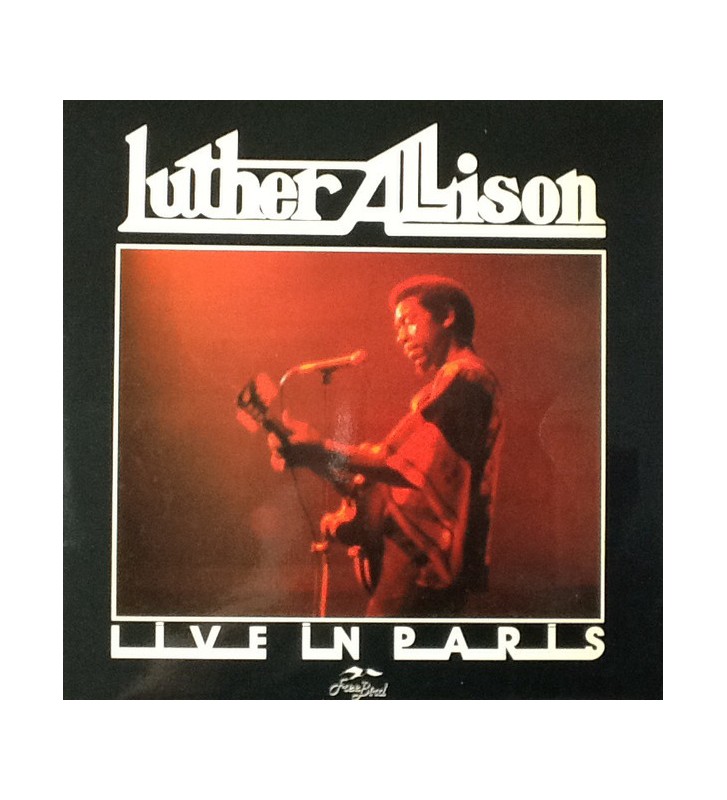
This album is what sealed the deal for me! To capture my dad’s live stage performance raw and natural. From the first song you hear the clarity of his Gibson 335, then the power and emotions of his voice bring chills to your skin. To hear him channeling his idols Otis Rush & BB King throughout the evening, only to put his own spin and personality in this set. Great list that shows his dedication and respect for genre. Giving everything that he has to the audience & listeners. I knew I had to learn this approach to even attempt to get in the business. So for me this album is Luther Allison at his finest! Leave Your Ego, PlayThe Music, LoveThe People, The Allison Way!
Bernard Allison

2024 December

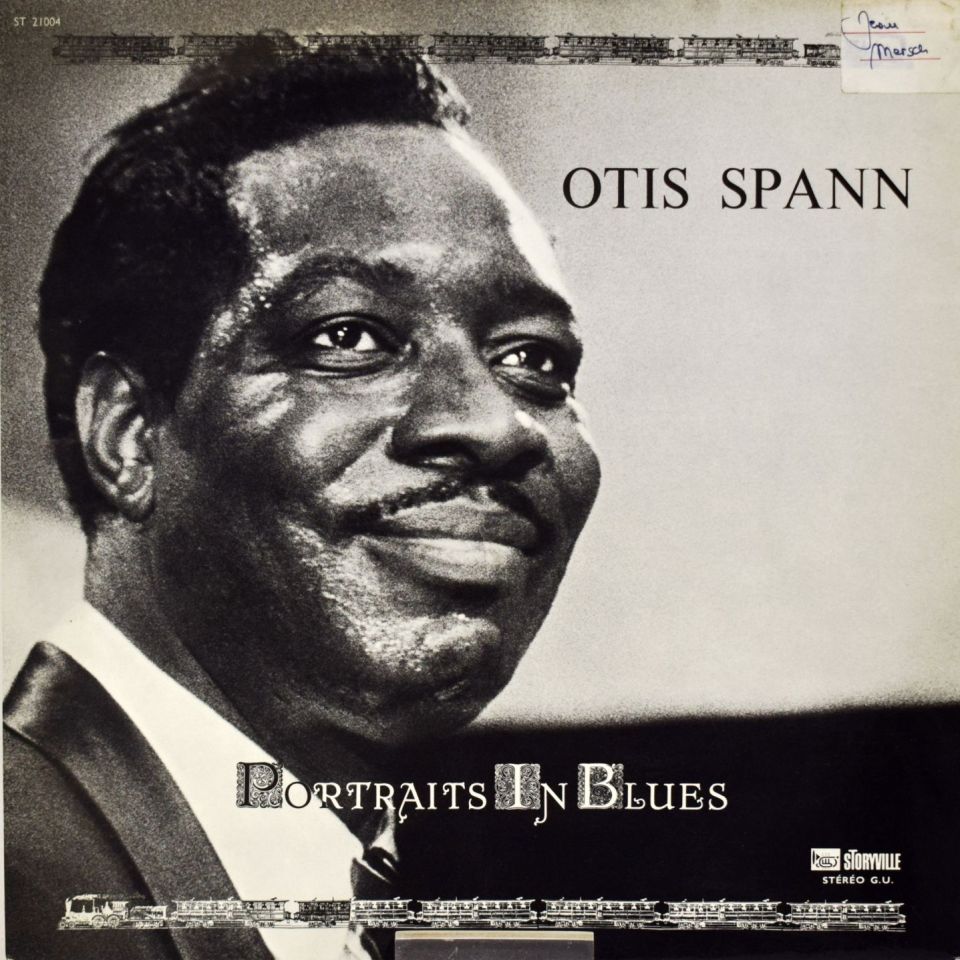
In the 1980s, the decade in which I was in my adolescent years (I’m from ’69), I sometimes stayed with my cousin in Santpoort-Zuid, who was a little older than me, just like in my childhood. I myself was, partly because of him, enormously ‘into Elvis’ and from there I came to the others, like Jerry Lee Lewis, Fats Domino, Johnny Cash and Little Richard. Week in, week out I went digging through the Vara-guide at home in search of the rare broadcasts of and about that music; in the week of August 16, the date Elvis died in 1977, everything had to give way to everything that was often broadcast on television in that week about, with and about Elvis; often moved to tears I let myself be sucked into the countless docu’s, films, that were still being broadcasted by the station bosses at that time. From my love for this, even then, “old shit” arose my total lack of musical connection with my peers. Where almost everyone walked around with Doe Maar buttons, I walked around with Elvis buttons on my jeans jacket. At disco parties, the most hip thing I requested was Shakin’ Stevens or the band RaceyDuring one of the sleepovers at my great nephew’s house, during which we played games, exchanged (not so) cool stories and listened to his cassette tapes of the aforementioned for us ‘usual suspects’ in the background, ‘something’ came along that immediately caught my attention. A rather slow song came along, with something in between that I couldn’t pinpoint at the time. Someone was playing something in between the vocal lines, of which I thought and especially felt ‘how can you play so many different tones/notes as filler so beautifully and still keep coming out before the other person starts singing again?’ What was that? And especially, who was that?No, the Internet was nowhere near then and the music was on a cassette tape compiled by someone. So no cover, no name, no expert, no idea…. (I myself only played recorder at a pretty high level and by now only owned a guitar) I can’t quite remember how I found out about it at the time. Perhaps cousin-love knew his sources. Maybe he recorded it from the radio, or had someone around him who recorded the tapes for him? In any case, I found out pretty quickly anyway that the musician of that song was named Muddy Waters. But then again, who was it that crammed those “dings” so perfectly timed between the vocal lines? It turned out to be piano, so from the pianist, and in that recording that was a musician named Otis Spann. In retrospect, I think I went into the Heemsteedse library’s record collection armed with the name Muddy Waters and found out on a record cover that one of Muddy’s pianists was Otis Spann. In that library, in my memory, they had quite a large collection of records. You could rent a record for three weeks for 50 cents or 1 guilder (double-LP). At home you would transfer the record to a cassette tape. And during homework there was always time for that…. And the best part was that you could compile your own ‘collectors’.Indeed, Muddy Waters with his Otis Spann was the starting point of my interest in blues music. Thinking back to the gems I rented from the library back then, quite a nice list of musicians and LPs come to mind, all of which I would like to discuss here, including my first vocal inspiration Luke “Longgone Miles. But fair=fair, my crossover from country and Rock ‘n roll to the blues, was at that time, that song, on that cassette tape at my cousin’s house. The Muddy Waters Blues Band featuring Otis Spann. I rented the LP “Portraits in Blues” by Otis Spann. Now, retroactively, there are a few key moments in my life for me that, coincidentally or not, have a link to this, who died in 1970 (age 41), Otis Spann. Indeed, I heard on this LP that Otis Spann was truly a master on the piano. Boogie Woogie was familiar to me (‘Boogie Woogie, Rob Hoeke), but blues piano is really something else then. What a timing, what a sound, what a voice. The first song on this LP by Spann is “Goodmornin’ Mr. Blues.” (Goodmornin’ Mr. Blues, blues how do you do?…)I make a small leap in time: it is now the late 80s (87 or 88?); in the illustrious Haarlem Jazz Club there is a jam session on Sunday, led by, among others, pianist Ed Comaita (with whom I formed my first serious band ‘A Crossroads Deal’ in 1993). It was a hot summer day and I had resolved, since it would probably be fairly quiet because of the heat and vacation season, to consider speaking to the session leader and perhaps daring to ask him to sing a song. Terrified, I thought, but I wanted it so badly. Before the session started at 3 p.m., I was inside the cluttered but oh so atmospheric jazz club. “Sir, could I maybe sing a song later?”; I had asked …, I had just done it. Point of no return….pffff. But as scary as I thought it was all, I was prepared to the teeth. I was going to do two songs: the first was a song I knew by now from the Muddy Waters Blues Band, “Everything’s gonna be alright.” The great thing about this song was, and still is, that halfway through it is vocally taken over by guitarist/singer Luther “Guitar Junior” Johnson (with this Luther I almost did a tour in Europe over 30 years later…). I have continued to do this song in about 95% of my performances ever since, as a kind of tribute to this first moment on stage.So the second song was the wonderful “Goodmornin’ Mr. Blues” by Otis Spann. I had done it; I had sung two songs at THE Haarlem
Robbert Fossen

2024 November

As a child of a pioneer of the Boogie-Woogie & Blues played in Europe, one would quickly think that this style of music was instilled at an early age. Of course in our house in Krommenie there was ‘sometimes’ music when my father was playing, but there was hardly ever music played. Logical really, because someone who performs 3, 4 or sometimes 5 times a week has heard enough music by then. As far as that goes, history repeats itself when I look at how much my children have learned and experienced from ‘music at home’. Anyway, DNA does not deny itself and so I have been walking the same path as my father for 31 years now. However, the first time I consciously ‘experienced’ a record myself was through my neighbor’s boy who in 1987 showed me the newly released U2 album ‘The Joshua Tree’. What a sound … And that guitar … Whole landscapes passed before my eyes. Later, when I got a record player I dove right into my mother and father’s very modest “collection. Little Richard, The Rolling Stones, Erroll Garner, Ten Years After, Elvis, Randy Newman etc. I loved it. So did “A Hard Road” by John Mayall & The Bluesbreakers. That became one of my favorites when I later started playing guitar. I once had that LP signed by John Mayall. But yes… Kees Dusink has already….hmmmmm.Then I now choose the double LP ‘John Lee Hooker & Canned Heat’ with the highlight being the 12-minute version of ‘Boogie Chillun’ with an absolute peerless starring role for Alan Wilson in it, who blows a piece of harmonica on it that to this day gives me goosebumps. My father could also enjoy that enormously. That power, that purity! An underrated child as far as I’m concerned, both this rendition and Alan Wilson himself. Enjoy!  
Ruben Hoeke

2024 October

For me it didn’t start with blues; I was 12 years old and in the evenings with my little transistor radio under the covers listening on medium wave to ‘Beatleshour’ on radio Luxemburg. I loved the Beatles, the Stones on 2 and there was an English band, The Yardbirds, with one Eric Clapton as guitarist, never heard of it…. but…then came 1966. By now I was playing bass guitar in a school band and through friends I discovered an LP of John Mayall’s Bluesbreakers with Eric Clapton, the famous ‘Beano album’ (by the way, do you put it in your record closet with the M or the C?). Great, what power in that music. Who had written all those songs? There had to be more of that. And what a sound Clapton got out of his guitar and how did he do it? It turned out to be a Gibson Les Paul with a Marshall amp, now known as the Bluesbreaker, man what a sound! In the window of music store Leny Bossink in Apeldoorn was a real Marshall Bluesbreaker! Back then, as a brat of 14, you didn’t just go in; my friends and I regularly stood with our noses pressed against the store window and dreamed. It stopped there, because I never started playing guitar, the bass guitar stayed. I played that LP until I couldn’t anymore (even the cover didn’t come out of the battle unscathed, see photo). I was sold on the blues and then of course discovered Dutch bands like Cuby and the Blizzards and Living Blues and all those fantastic Americans, like BB, Albert and Freddie King (I consider myself very fortunate to have seen the latter live twice in the early ’70s at the open air theater in Lochem and Paradiso Amsterdam), Muddy Waters, Howlin’ Wolf, Otish Rush, and so on; a long list. I never lost that love for blues and closely related music. Thanks to all those heroes!
Eric Bagchus (Flavium)

2024 September

Choose the LP of the month for Blues in Wijk… It’s great to be allowed to do this, but then it turns out to be quite a challenge! After all, several LPs have contributed greatly to the style of my own music, so which one do you choose?…. Brother Dege? His music made me start playing slide guitar and on a resonator. Rory Gallagher? Or will it be… Yes! Then it will be Robben Ford. Because without this blues giant I wouldn’t have been introduced to the blues at all. The album “Talk To Your Daughter” was the reason I wanted to learn to play the blues on the guitar. This song and the album are really precious memories for me. At some point during my studies at the conservatory, I lost the direction of my own music. In graduation year, you were researching an artist or piece of music. I lost track at that point, had no idea what to choose! The search for my music led me to my old phone that I hadn’t looked at in a few years. There I came across all kinds of MP3s on it. The song “Talk To Your Daughter” came along and I remember it felt like a “thunderclap. It occurred to me: this is what I want! Just play guitar with emotion and bam! I found that in the blues. For me in this song it’s in the intro, how his guitar pops in. Technically it is very well played, yet there is also a lot of feeling in his playing. At just the right moments he gives space to his solo. There are many good blues guitarists, but with Robben Ford I’m always impressed how he manages to dress it up melodically as well. For me, it’s an incredibly balanced album. Full of blues traditionals and his own interpretation of them, but also forays into a more “soul and fusion” sound like on the song “Help The Poor. His solos on this album are always on point, bluesy and with forays into other styles. Once I got to see him live. He hadn’t been in Europe for a while and I really wanted to see him live. So when he was coming to Paris at the “Le Trianon” theater, I immediately ordered tickets. Backed by young musicians, he put on a fantastic live show. Although he himself exuded a tremendously calm energy, his solos were imbued with emotion. Halfway through the show his amplifier failed so he went to play air guitar for a while. Once back in the Netherlands I found out that two months later he would be performing practically around the corner, haha.
Merel van de Keer

2024 August

Although The Nighthawks have been around since 1972, I chose this record from 1993. Due to the fact that I rolled into the blues from the rockablilly scene as a singer-guitarist, I actually first became acquainted with the (then) more modern blues artists. That’s how I first heard of Microwave Dave and the Nukes on a blues program on Belgian radio. I liked that but didn’t pay any further attention to it at the time. Some time later I was on a road trip in the southern states of the USA and, as if by chance, ended up in a club in Nashville called Printers Alley. On the stage was a drum kit with Microwave Dave’s name on it. “It can’t be?” I thought to myself, but it was. That night we enjoyed their performance and afterwards we went for a chat because I was also writing articles for “Back to the Roots” at the time. We had a nice chat and Dave invited me to come back and listen the next day. No sooner said than done and the day after, on my birthday, we were back at Printers Alley. The band came in, greeted us and I told them it was my birthday. Halfway through their gig they suddenly stopped: “We have a birthday in the house,” Dave called out and I was allowed on stage. There he gave me my first harmonica and I had to play along with the band. I tried very hard but nothing good came out of it. I took the harmonica home and one day I put on “Rock This House” by the Nighthawks. I tried to play along a little on the first song, the title track, and I heard that at least the key was already right. I played that song about 2,500 times after that and each time I tried to play along and each time it got a little better. So actually I can say that Mark Wenner taught me to play harmonica, accompanied by Danny Morris. Years later I even decided to stop playing guitar on stage and devote myself entirely to singing and harmonica, and to this day I’m still glad I walked into Printers Alley in Nashville on the right day then. And ‘Rock This House’ I still put on regularly because it remains a good record and with Bill & The Burners we even play their version of ’16 Tons’ now.
Wim de Vos (Howlin’ Bill)